
So I heard you have this amazing idea for a world and story, what are you waiting for? Ah yes right, the actual writing bit. It can be the bane of some people’s existence and to others a mild bump in the road. Sometimes that comes down to how you plan, but don’t worry you don’t need to know exactly what you are doing at every millisecond of your character’s lives. The best way to have an idea from beginning to end is to think of the 10 major scenes you want to happen.
What? Only ten? Don’t worry it’s not downplaying the story. You can still have that overly complicated politic struggle for 120 pages because we are talking about the 10 major turning points of your story. The points that lead your protagonist to their goal, or their demise. Depending on your mood I suppose.
This week we have a new worksheet to help you make quick notes that you can keep on hand when writing your next award winning piece!
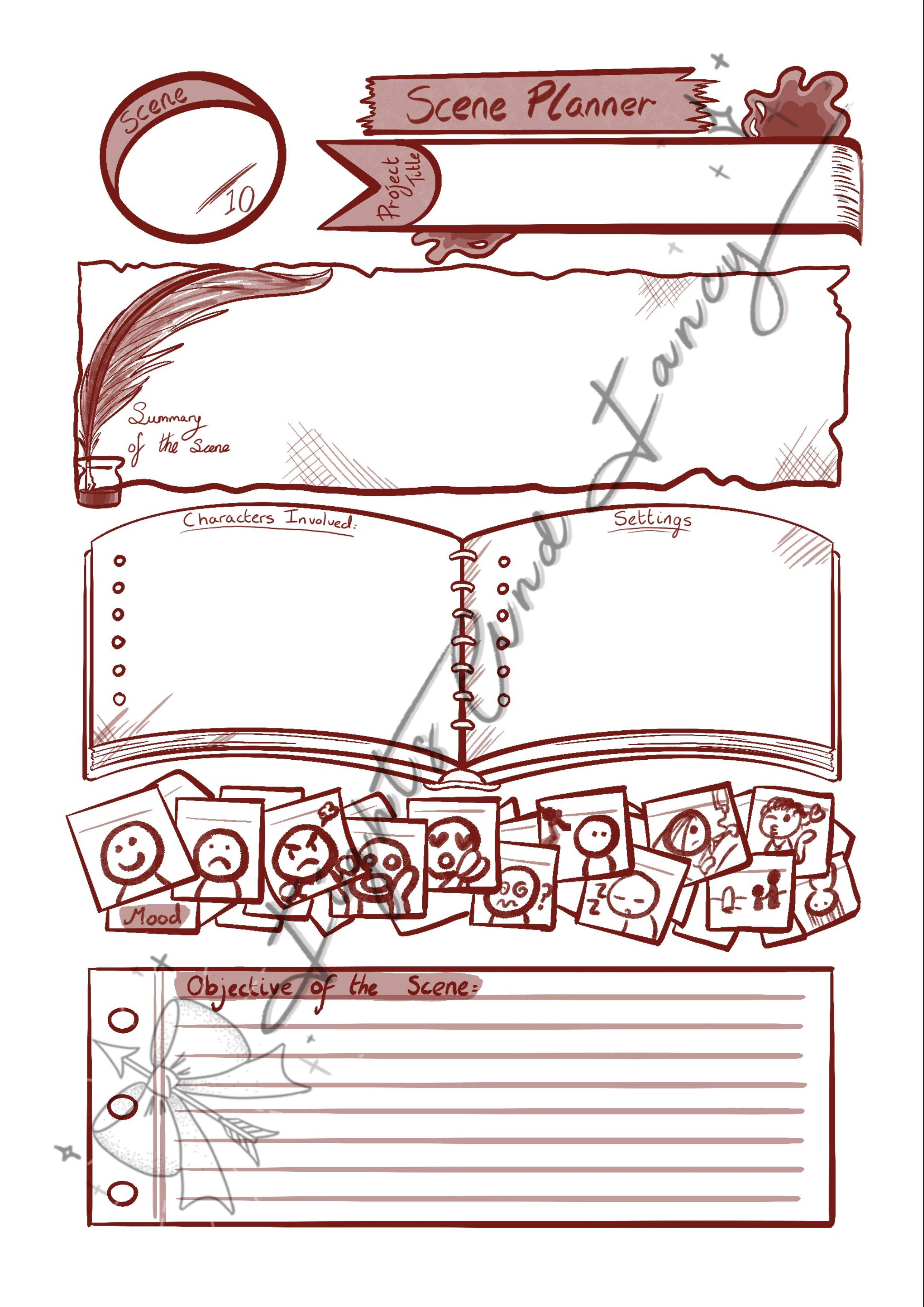
Summary of the scene
Pretty self-explanatory however you don’t need to go into great amounts of detail. Something as simple as ‘Alice fell down the rabbit hole’, the key is to write in the amount of detail that will still make sense to you later. We’ve all been in a situation where you wonder what the heck you wrote when we go back to them later
Characters involved
What characters are directly involved in this event? Who’s invited to this party? Doesn’t mean others can’t tag along but it’s not going to happen unless it’s Andy Allmates.
Setting
Where does it all go down? Is it an urban setting? Maybe it needs to be destroyed! Maybe it needs to be set in the middle of winter when the sun is highest! Make sure to note down anything you need to make sure the right mood is set in your event.
Mood
How do you want this scene to make you feel? Feel free to highlight images that resonate the feel you want and don’t see one that describes your particular brand of melancholy don’t worry! The ones provided are basic emotions to sort most scenes. You can always make a note in the next section.
Objective of the scene
This is the most important section. It’s all well and good Alice falls down the rabbit hole but what is the point of the scene? Again this can be as simple as- It gets her into Wonderland but can also be as descriptive as;
It represents Alice’s naivety and lack of planning where she begins to fall into a world that doesn’t make sense. It represents her being thrust into the status of adulthood where she must fend for herself. The irony of her childish wants and desires.
Both are equally valid and are helpful to different people based on how they wright.

Another writer’s freebie to help you plot the 10 key scenes across your narrative arc. You can see our blog post on the 10 key scenes for further information on how this worksheet can help you plot your journey in writing the next big epic you have planned.
Lastly, don’t worry about making the time between events even. There is no rule that says several important events can’t happen one after the other if the flow of your story allows it. I would recommend, in order to make the story flow easily though to have one major event at the end of each act; Act 1, Act 2 part 1, Act 2 part 2, and finally Act 3. These are generally good checkpoints to help you move the story along at a good pace.
I hope the worksheet is useful and helps your future project.
See you next week!