Writing Week: Where do I start with Worldbuilding?
Whether it’s for writing or for planning your next homebrew, the most daunting part of the process can often be coming up with the world that your story is set in, and how to make that world feel like it has come to life instead of being ‘basic fantasy medieval town’.
Today we are going to take some time to talk about the baby steps of world-building. Once we have our initial building blocks you will soon come to see how this can easily snowball into a much bigger thriving environment where everything affects each other.
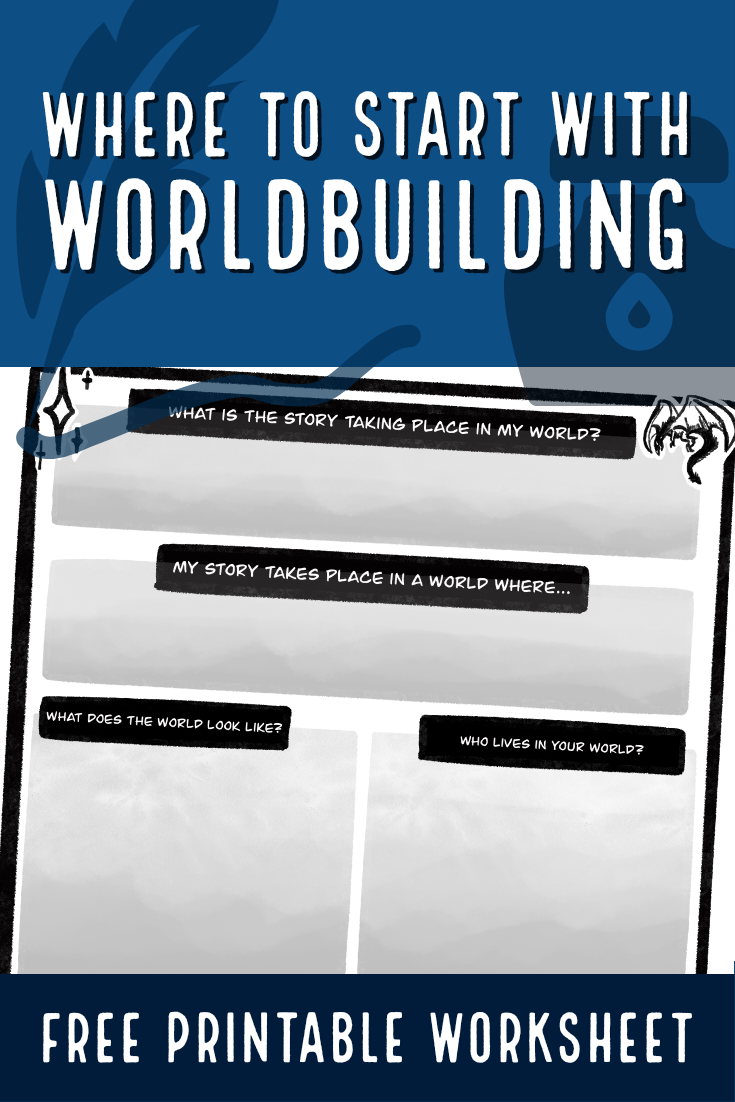
For this, we have also included a small worksheet you can download and use for your own world-building if you want!
1. What is the story taking place in my world?
For some people, worldbuilding comes first, and for some, it is far simpler to come up with a world once they already have an idea of the story they want to tell. In my own experiences, I have found that even when worldbuilding has been the easiest part to come up with, keeping the story I want to tell in my mind helps to direct the worldbuilding in the right way.
Think of it as choosing a genre for the story, your world is the setting within which the story is told after all. It would be strange for a medical crime drama to take place in a fairy kingdom perhaps, or weird for a dungeon-crawling epic adventure to take place in a modern urban setting. Maybe not unheard of, but unlikely choices, and definitely something you might want to think about if you want your setting to break the mould.
So even if it is in the simplest terms – for example, “My story follows a betrayal of a hero at the hands of the king he serves.” – write a note about the story you’re wanting to tell. It will not only begin to help turn the wheel of ideas for where your story might be set, but it will help to keep you focused on the factors that matter most to your story instead of running away with yourself and planning the social-economic balance of a small fishing town in a democratic nation, those kinds of details can be the focus of your attention at a much later date.
2. My story takes place in a world where…
Now that we have established the story you want to follow; we can begin to focus on the world. This question can be answered as simply or as broad as you want. You simply want to get a basic idea of what the world is like.
Let’s take our earlier example into consideration:
The Story of a hero who is betrayed at the hands of a king he serves takes place in a world where the kingdom is the only land with water for hundreds of miles.
Answering this question starts to pose more questions that you might want to answer. Why is the kingdom the only place with water? How do they get this water? What would a society be like with such a limited resource? Would they have strict measures in place to equally distribute the supply or would some have priority over others? What is the world like beyond the kingdom, are there other settlements and how do they relate to the kingdom?
You might even receive some prompts for the plot of your story from this world idea. Could it be that the hero was betrayed and exiled to the desert where they uncover a great conspiracy of the kingdom stealing water from the land?
If you are struggling with coming up with a setting idea feel free to indulge in finding inspiration on Pinterest, looking up unused concept art or even use a random generator until something sticks. You can always look at our Worldbuilding Exercise Book for prompts.
3. What does the world look like?
What kind of terrain do people live in? Is it somewhere that is otherworldly? Does it look similar to anywhere in the real world? Taking account for things like weather or what kind of resources there are might affect the look of your world.
The world of the betrayed hero could look like an oasis kingdom in the middle of an endless desert, or it could look like a foul swamp that surrounds one patch of land with mountains and the capability to purify their own water. You could even take it into a more science fiction influenced fantasy, where the world outside of the kingdom is a diseased radioactive wasteland and the kingdom has some kind of measures for keeping that kind of toxic waste at bay or purified.
Write a small description of what a newcomer to the world might first notice about the way it looks or collect a collage of images and inspiration for the look of your world.
4. Who lives in your world?
Is your fantasy world a place filled with a multitude of races and magical creatures, or is it far more similar to our own with only the human race dwelling in it and the animal kingdom? This is an excellent opportunity to brainstorm what kind of life forms you want to live in your world, or even if they are capable of. If your world is otherworldly then maybe it is not human life like we know it but almost alien or some kind of mythical creature, and these beings have something that humans lack which might help them to adapt to their surroundings. Think about the story you want to tell and what kind of people might be needed for that.
Whilst answering this question you might also come up with details about your world that might have been affected by the people who dwell in it which you can take note of at the side.
5. What is society like?
Now that you know about who might live in your world it’s important to consider how they survive here. This stage can be quite difficult for some people. When it comes to explaining how your fantasy world works it is very easy to say “It just does” but people tend to have very predictable patterns for how they live and interact with one another. This is a great segment to start thinking about how the cultures of your world were created and how people started from the early days of their creation and grew into the grand kingdoms they have now.
How is their society run? What political or cultural structures have you learnt about in our world that can be applied to this one to explain how this one does? If your story follows a revolution, then your society will have evidence of some structural imbalance that will lead to civil unrest. History can be an excellent resource for learning how societies live, survive and crumble under different circumstances.
There are some excellent questions online in writing communities, Pinterest or other forums that can help you to go into the details of what your society is like, but for now, you can simply write any initial thoughts that you might have or take notes of things your society might need to have for your plot to happen.
6. What’s strange about the world?
Does magic exist? Do the gods walk among men? Is the world actually on the back of a giant turtle? What is it that sets this world apart as a fantasy world from our own?
Of course, there does not have to be anything strange about your world. It can simply be a fantasy setting that could very well have once existed in our Roman era, or Victorian era etc. Worldbuilding can be as soft or as hard as you want it to be for your story, and the world can be as strange or normal as you like too. But if you are wanting to include anything like that it is good to come up with them at the beginning of your writing process instead of shoehorning a creation myth or magic system halfway through your story.
In the world of the betrayed hero it could be that water is a resource that only a specific race of magical creatures can create, and the Kingdom has them rounded up and put into servitude to help keep the human race alive, but they were once born of the deep oceans that exist over 100 miles away across the desert, and our hero must find out if there are any more of them or if the kingdom has the last of their kind.

A free worksheet to go hand in hand with our blog about getting started with worldbuilding for writing or other storytelling platforms. This free pdf comes with 1 A4 printable sheet and 6 questions to answer about your world.
I have had many people compare world building to an iceberg, quite often when it comes to writing there might be a wealth of knowledge you have about your own world that is important to know how your world works but is never mentioned when you write. It can seem very daunting but once you get into the flow of discovering more and more about the world you are going to be writing in, I have found you can lose whole afternoons to research and note-taking without even noticing it.
I hope that you found some of this advice useful and that it provides a good starting point for where you might want to go with your own worlds. Let us know if you have any questions and what your current world you’re working on is in the comments!